Shepherd is a workspace for teams whose work moves between source documents, technical data, explanations and decisions. We bring those activities into a connected product so that the next person can understand what was done, which material supports it and where human review is still needed.
Important work rarely lives in one format. An engineer may start with a report, compare values in a spreadsheet, discuss a system diagram and finish with a note for the next team. When each step sits apart, people spend time rebuilding context. The file may be available while the reason behind it is missing.
Shepherd is built around that gap. Its purpose is to help people work on the material itself and develop an explanation that remains connected to the evidence. Finding a source, interpreting it and accepting a conclusion are different steps. A useful workspace makes each step understandable instead of treating a generated answer as the end of the job.
Principles You Can See in the Product
Keep the Source in Sight
A useful answer gives the reader a way to inspect the material behind it. Documents and Wiki pages provide a place to retain context, compare passages and explain how a conclusion was reached. The source should remain useful to someone who was not part of the original conversation.
For example, when two technical documents disagree, keep both statements visible and record why one applies to the case. The review is part of the knowledge, not an afterthought.
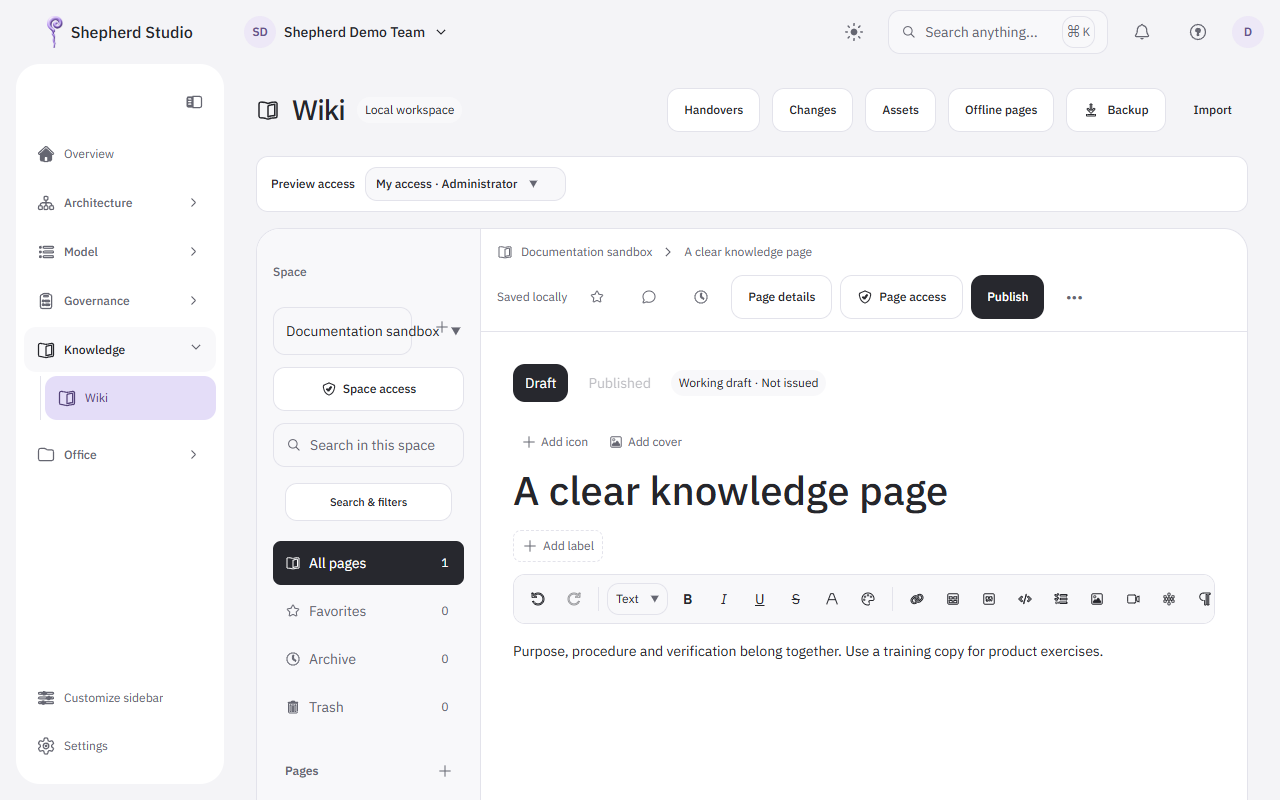
Actual Shepherd Wiki: a knowledge page with its surrounding workspace.
Leave Room for Judgement
Writing clearly and deciding what to accept are different responsibilities. Drafting tools can help organize a note or prepare an explanation, while the people responsible for the work review its assumptions, evidence and limits. Uncertainty should remain visible until the relevant question is resolved.
This matters when a new document changes an earlier interpretation. The next reader needs the updated conclusion and the reason for the change, rather than another confident paragraph without a review trail.
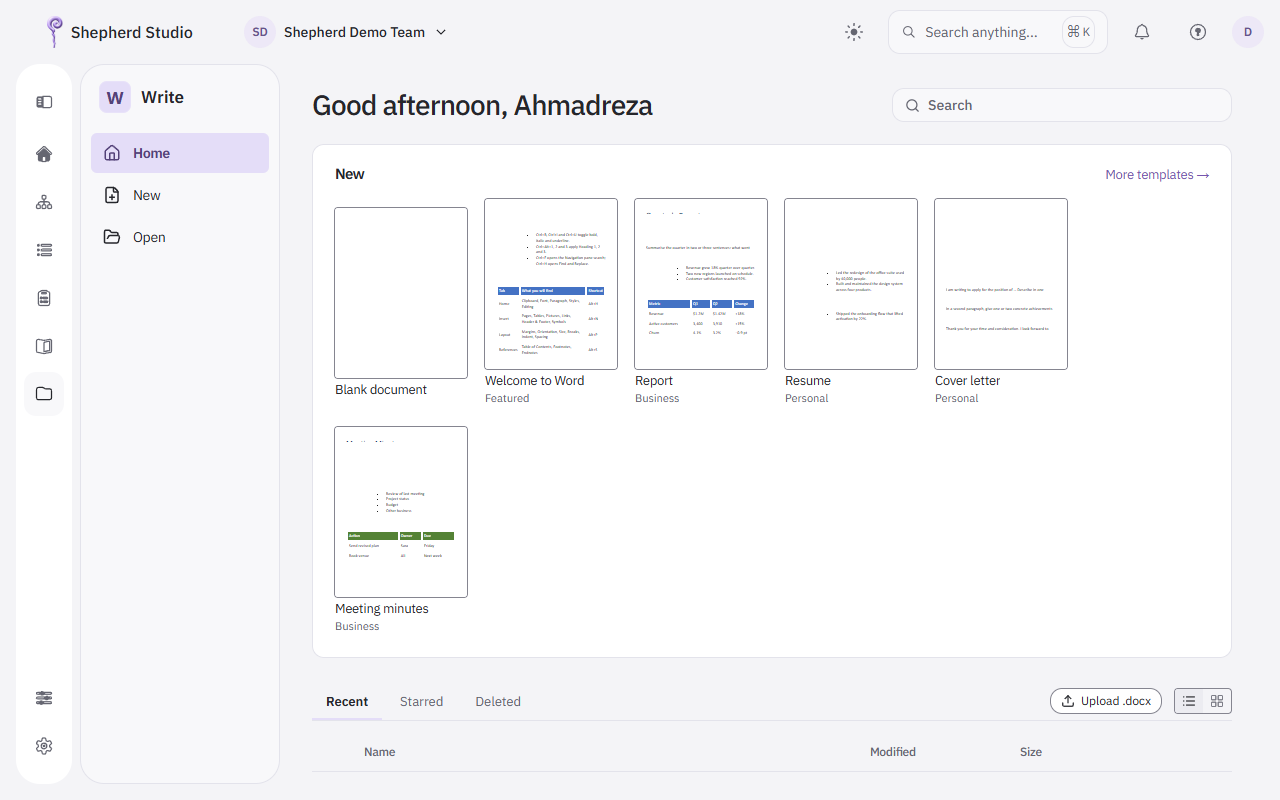
Actual Shepherd Write: access to writing tools and documents.
Respect the Way Teams Work
Teams need to read, write, calculate and explain. Shepherd includes document, spreadsheet, presentation and PDF tools alongside knowledge and diagram work. Familiar outputs matter because the result often needs to be handed to a colleague, reviewed in a meeting or carried into another workflow.
Persian and English are part of that approach. Direction, typography and readable document layouts deserve the same attention as the tools themselves. Local and shared working arrangements should be selected around the team’s actual operating needs.
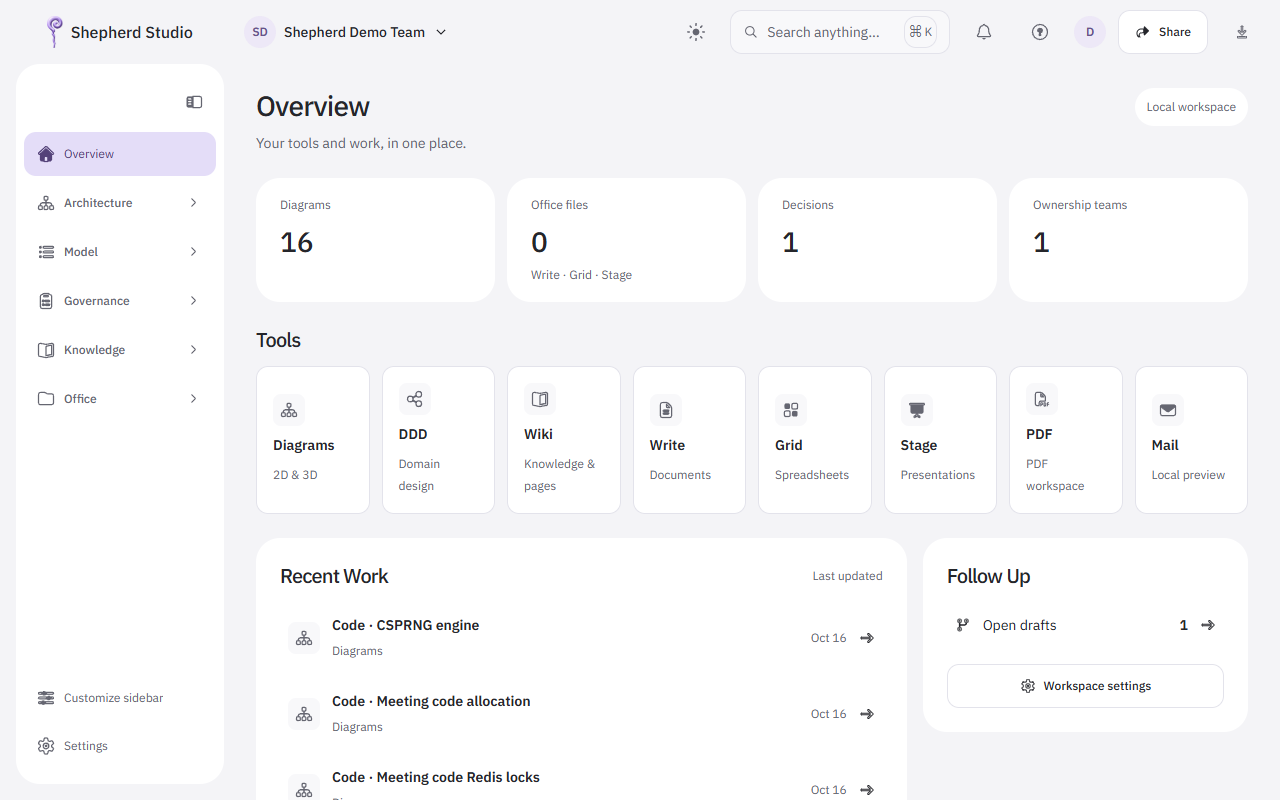
Actual Shepherd workspace: access to documents, knowledge and working tools.
Built Around the Work Teams Already Do
The starting point is a real task and the material needed to complete it. Different teams use different parts of the workspace; the connection between evidence, explanation and review stays relevant across them.
Petroleum and Technical Analysis
A well-log workflow starts with the supplied LAS data, its channels and units. Specialist charts become meaningful when the correct source series are mapped and the interpretation is reviewed. Shepherd’s oil examples combine log skills, analytical views and source-based explanations; a template or a sample preview is distinct from an executed, accepted result.
Engineering and Project Work
System maps help people understand components and dependencies. Technical documents explain the constraints and decisions around them. Keeping the overview near its supporting material helps a new colleague find the right context and gives a review meeting a more focused starting point.
Knowledge and Everyday Coordination
A team also needs practical outputs: an editable note, a workbook, a presentation and a clear handover. Use the tools required for the task and agree who maintains the source, reviews the explanation and takes the next action. The workspace supports that process; ownership remains with the people doing the work.
Evaluate Shepherd with a Real Workflow
Choose one representative task, a small set of suitable source files and the people who will review the result. Check the output format, trace the reasoning and confirm what the selected environment needs to run. Shared access, installed processing and external providers depend on that environment. A focused evaluation establishes what fits your team before the scope grows.